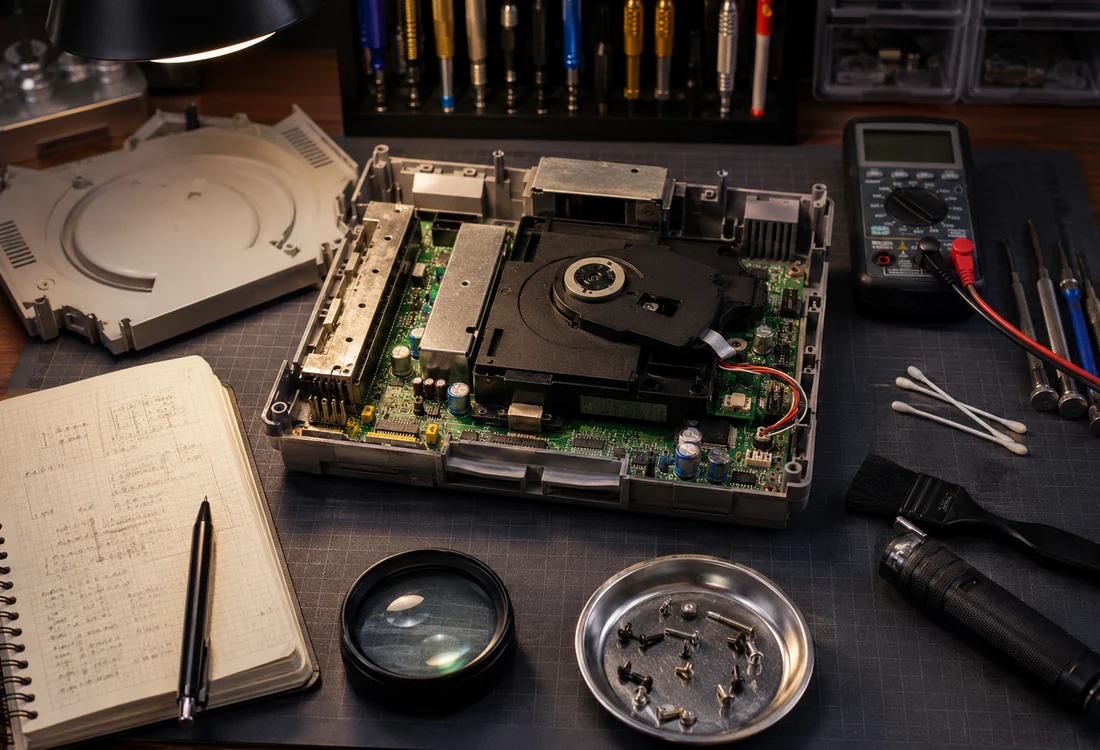
Voltage, polarity, current and regulation matter more than whether the plug physically fits.
Why the correct supply matters
A plug that fits is not proof that a power supply is safe. Voltage, current capacity, polarity, connector dimensions and whether the output is AC or DC all matter. Region-specific hardware can add another layer of risk. An incorrect supply may prevent startup, produce unstable video, overheat components or cause permanent damage.
Collector decisions improve when claims are converted into observable evidence. Ask for clear photographs, exact model information and a description of the test procedure. Keep cosmetic condition, functional condition, originality and completeness as separate categories rather than collapsing them into one vague grade.
Verify before connecting
Read the console label and the supply label separately. Confirm the required output type and polarity from reliable technical documentation. Inspect cables for cracking, repairs, exposed conductors and loose strain relief. When the original supply is missing, choose a properly specified replacement rather than a generic adapter selected only by connector size.
Collector decisions improve when claims are converted into observable evidence. Ask for clear photographs, exact model information and a description of the test procedure. Keep cosmetic condition, functional condition, originality and completeness as separate categories rather than collapsing them into one vague grade.
Originality versus safe use
Original power supplies can add completeness to a boxed set, but age can make them electrically unreliable. Some collectors keep the original accessory for display and use a modern, correctly regulated replacement for routine play. Preserve the original label and cable condition, and clearly disclose which supply was used for testing.
Collector decisions improve when claims are converted into observable evidence. Ask for clear photographs, exact model information and a description of the test procedure. Keep cosmetic condition, functional condition, originality and completeness as separate categories rather than collapsing them into one vague grade.
Practical checklist
- Confirm the exact model, region and revision.
- List every included accessory and every missing item.
- Separate visual inspection from functional testing.
- Photograph labels, ports, seams, damage and prior repairs.
- Calculate the cost of cables, test media and likely service.
- Decide which changes are reversible before beginning work.
- Keep original parts and a written maintenance record.
A collector’s decision framework
Use four separate scores: originality, completeness, cosmetic condition and verified function. A system can be excellent in one category and poor in another. Decide which category matters most for your collection before paying a premium.
| Question | Low-risk answer | Higher-risk answer |
|---|---|---|
| What was tested? | Specific media, ports and controllers | “Powers on” or “worked before storage” |
| What has changed? | Documented, reversible service | Unknown repairs or cosmetic treatment |
| What is included? | Photographed component list | Assumed completeness |
| What happens next? | Known cleaning or service plan | Open-ended diagnosis |
How to document and disclose the result
Keep the original listing, purchase date, seller description and your first condition photographs. Record every cleaning product, replaced part and modification. When selling later, distinguish verified facts from your own impressions. Clear disclosure protects the next collector and supports the value of careful work.