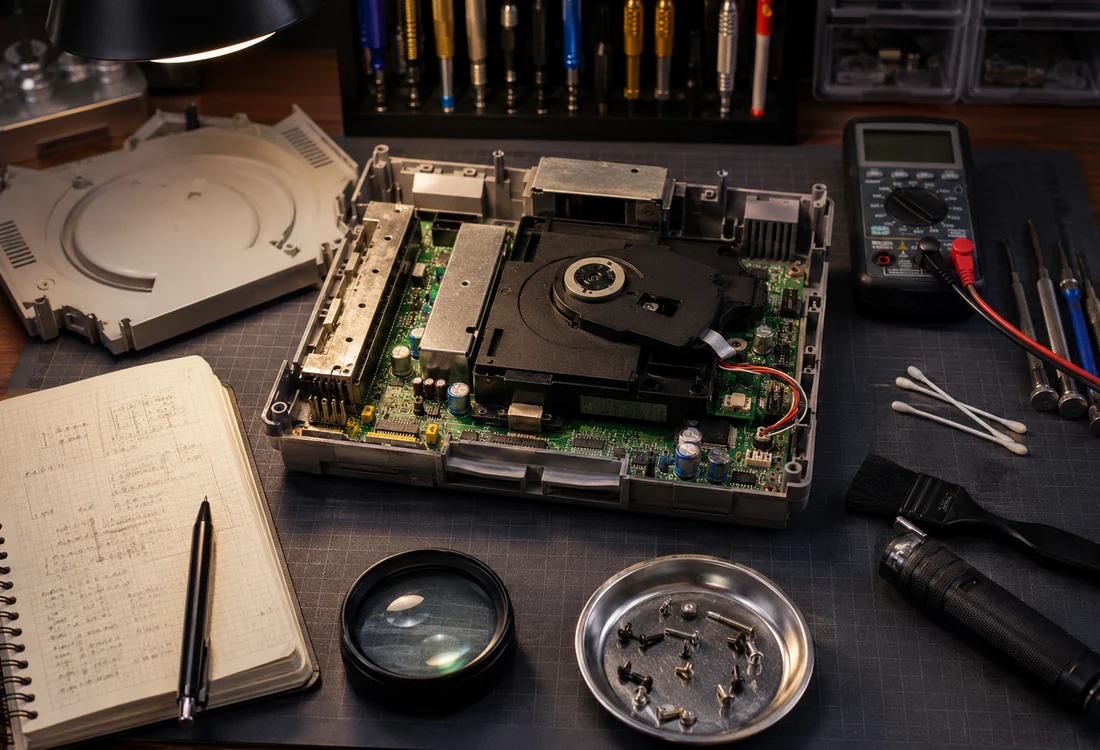
Show condition clearly with neutral light, complete angles and honest close-ups.
Why “untested” is a condition, not a bargain signal
An untested console is not the same thing as a broken console, but it is also not a working console. The useful way to read the word is that the seller has not supplied enough evidence to move the hardware out of the unknown-risk category. That missing evidence has a real cost. You may need a correct power supply, a known-good controller, compatible media, an appropriate display connection and time for diagnosis before you learn whether the system works at all.
Collector decisions improve when claims are converted into observable evidence. Ask for clear photographs, exact model information and a description of the test procedure. Keep cosmetic condition, functional condition, originality and completeness as separate categories rather than collapsing them into one vague grade.
Separate missing equipment from missing knowledge
Some sellers genuinely lack the cable, display or cartridge needed to test an old system. Others use “untested” because a quick test produced an uncertain or disappointing result. The listing alone usually cannot tell you which situation applies. Ask what equipment was available, whether the system was ever powered on, whether any indicator appeared and whether the seller noticed heat, odor, noise or intermittent output. A precise answer is more useful than a promise that the system “worked years ago.”
Collector decisions improve when claims are converted into observable evidence. Ask for clear photographs, exact model information and a description of the test procedure. Keep cosmetic condition, functional condition, originality and completeness as separate categories rather than collapsing them into one vague grade.
Build a maximum-risk purchase price
Start with the value of a confirmed working example in comparable cosmetic condition. Subtract the cost of missing power and video accessories, a controller, test media, likely shipping damage exposure and the repair work you are actually willing to perform. Leave room for a complete failure. The resulting figure is often much lower than the optimistic asking price attached to an “easy fix” description.
Collector decisions improve when claims are converted into observable evidence. Ask for clear photographs, exact model information and a description of the test procedure. Keep cosmetic condition, functional condition, originality and completeness as separate categories rather than collapsing them into one vague grade.
Evidence that improves an untested listing
Clear photographs of the model label, ports, cartridge slot or optical drive, battery compartment, controller connectors and included power supply can reduce uncertainty even when a functional test is unavailable. Images of corrosion, broken plastic, liquid residue, bent pins or mismatched accessories can also save you from buying a project that exceeds your intended scope.
Collector decisions improve when claims are converted into observable evidence. Ask for clear photographs, exact model information and a description of the test procedure. Keep cosmetic condition, functional condition, originality and completeness as separate categories rather than collapsing them into one vague grade.
Stabilize before beautifying
The first goal is to prevent further damage. Remove leaking batteries, isolate corrosion, address unsafe power components and stop mechanical stress before pursuing cosmetic improvement. A clean-looking console that still has active corrosion is not restored.
Collector decisions improve when claims are converted into observable evidence. Ask for clear photographs, exact model information and a description of the test procedure. Keep cosmetic condition, functional condition, originality and completeness as separate categories rather than collapsing them into one vague grade.
Use the least invasive effective method
Begin with dry cleaning, soft brushes and controlled spot testing. Avoid aggressive solvents, abrasives and heat unless the material and risk are well understood. Preserve labels, molded texture and factory marks. Reversible work is easier to disclose and less likely to erase evidence of originality.
Collector decisions improve when claims are converted into observable evidence. Ask for clear photographs, exact model information and a description of the test procedure. Keep cosmetic condition, functional condition, originality and completeness as separate categories rather than collapsing them into one vague grade.
Keep a treatment record
Record the date, symptoms, parts replaced, products used and before-and-after photographs. Store removed original components in a labeled bag when practical. Good documentation turns an unknown repair into a transparent maintenance history.
Collector decisions improve when claims are converted into observable evidence. Ask for clear photographs, exact model information and a description of the test procedure. Keep cosmetic condition, functional condition, originality and completeness as separate categories rather than collapsing them into one vague grade.
Practical checklist
- Confirm the exact model, region and revision.
- List every included accessory and every missing item.
- Separate visual inspection from functional testing.
- Photograph labels, ports, seams, damage and prior repairs.
- Calculate the cost of cables, test media and likely service.
- Decide which changes are reversible before beginning work.
- Keep original parts and a written maintenance record.
A collector’s decision framework
Use four separate scores: originality, completeness, cosmetic condition and verified function. A system can be excellent in one category and poor in another. Decide which category matters most for your collection before paying a premium.
| Question | Low-risk answer | Higher-risk answer |
|---|---|---|
| What was tested? | Specific media, ports and controllers | “Powers on” or “worked before storage” |
| What has changed? | Documented, reversible service | Unknown repairs or cosmetic treatment |
| What is included? | Photographed component list | Assumed completeness |
| What happens next? | Known cleaning or service plan | Open-ended diagnosis |
How to document and disclose the result
Keep the original listing, purchase date, seller description and your first condition photographs. Record every cleaning product, replaced part and modification. When selling later, distinguish verified facts from your own impressions. Clear disclosure protects the next collector and supports the value of careful work.