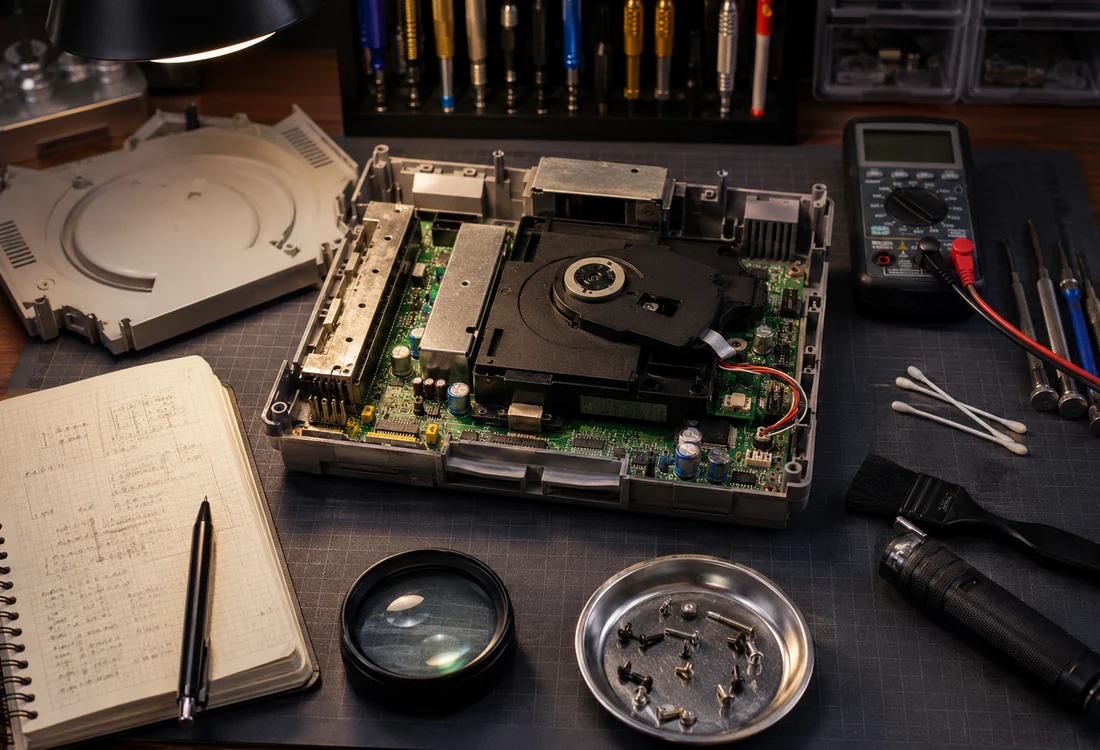
Yellowing can be cosmetic, uneven, structurally revealing or evidence of mixed replacement plastics.
What yellowing does and does not tell you
Yellowed plastic can result from age, light exposure, heat and the chemistry of flame-retardant additives. It does not automatically mean the console was stored badly, and a bright shell does not prove that it is original or untouched. Compare areas protected from light, including the underside, battery covers and seams. Uneven color can reveal replacement panels or previous cosmetic treatment.
Collector decisions improve when claims are converted into observable evidence. Ask for clear photographs, exact model information and a description of the test procedure. Keep cosmetic condition, functional condition, originality and completeness as separate categories rather than collapsing them into one vague grade.
When cleaning becomes alteration
Surface dirt, nicotine film and adhesive residue can often be removed conservatively. Chemical whitening and prolonged ultraviolet treatment go further because they change the appearance of the plastic itself. Results may be uneven, temporary or accompanied by increased brittleness. A collector-grade original shell with honest age can be preferable to a dramatically whitened shell with uncertain long-term stability.
Collector decisions improve when claims are converted into observable evidence. Ask for clear photographs, exact model information and a description of the test procedure. Keep cosmetic condition, functional condition, originality and completeness as separate categories rather than collapsing them into one vague grade.
Document before treatment
Photograph the console in neutral light from every side before cleaning. Record serial labels, warranty seals, cracks and color differences between components. This protects the history of the object and gives a future buyer an honest record of what was done. Keep treatment notes with the console rather than relying on memory.
Collector decisions improve when claims are converted into observable evidence. Ask for clear photographs, exact model information and a description of the test procedure. Keep cosmetic condition, functional condition, originality and completeness as separate categories rather than collapsing them into one vague grade.
Practical checklist
- Confirm the exact model, region and revision.
- List every included accessory and every missing item.
- Separate visual inspection from functional testing.
- Photograph labels, ports, seams, damage and prior repairs.
- Calculate the cost of cables, test media and likely service.
- Decide which changes are reversible before beginning work.
- Keep original parts and a written maintenance record.
A collector’s decision framework
Use four separate scores: originality, completeness, cosmetic condition and verified function. A system can be excellent in one category and poor in another. Decide which category matters most for your collection before paying a premium.
| Question | Low-risk answer | Higher-risk answer |
|---|---|---|
| What was tested? | Specific media, ports and controllers | “Powers on” or “worked before storage” |
| What has changed? | Documented, reversible service | Unknown repairs or cosmetic treatment |
| What is included? | Photographed component list | Assumed completeness |
| What happens next? | Known cleaning or service plan | Open-ended diagnosis |
How to document and disclose the result
Keep the original listing, purchase date, seller description and your first condition photographs. Record every cleaning product, replaced part and modification. When selling later, distinguish verified facts from your own impressions. Clear disclosure protects the next collector and supports the value of careful work.